
Field Asset Studies · Sample Systems
Sample System Assessments
Review the Sample Path Before Selecting the Fix
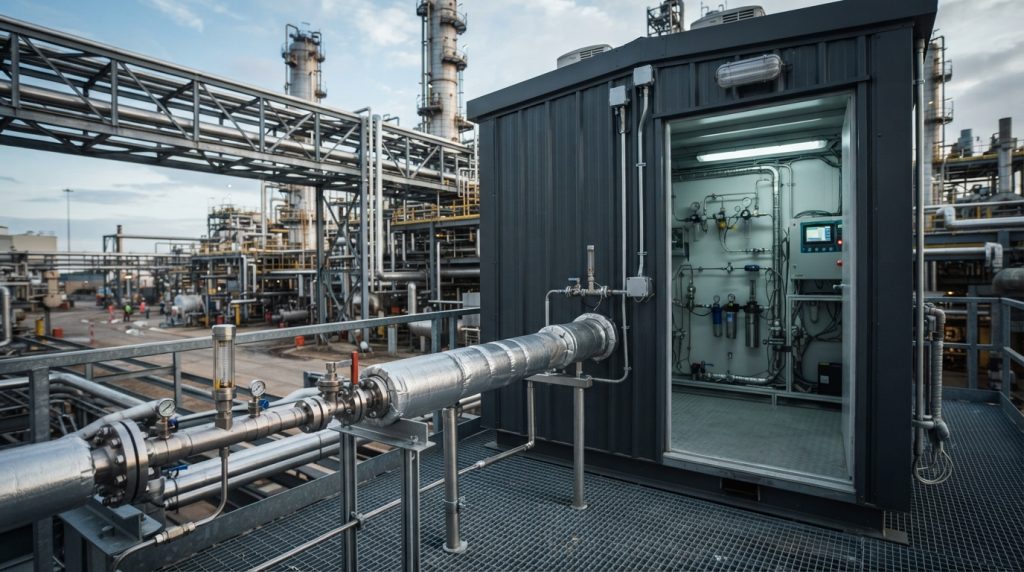
AES provides sample system assessment capabilities for both analytical sampling conditioning and grab sampling equipment. The review considers how a sample moves from collection point to its return.
Configuration
Sample-path review
Requirements
Operating conditions
Condition
Maintenance review
Options
Findings and improvements
What It Is
What Is a Sample System Assessment?
A sample system assessment examines the configuration and observed condition of the equipment used to obtain, transport, prepare, and deliver a process sample.
The equipment used to:
Capabilities
Sample System Assessment Capabilities
Four reviews, from the sample-path configuration to improvement options.

Sample-Path Configuration Review
Review extraction interfaces, tubing routes, conditioning components, and downstream connections against the available design basis. Identify missing information and arrangements that warrant further verification.

Operating-Requirement Review
Consider the stated sample composition, pressure, temperature, phase, and analyzer inlet requirements. These factors influence whether the existing arrangement is suitable for the intended measurement.

Condition and Maintenance Review
Use field observations and maintenance records to identify recurring service concerns, difficult access, or frequently replaced components. Separate reported symptoms from causes that have been verified.

Findings and Improvement Options
The agreed deliverable can identify concerns, supporting observations, recommended follow-up, and potential modification scopes. Additional calculations, testing, or engineering may be needed before a final equipment change is selected.
The Measurement
Assess the System for the Measurement It Supports
A representative sample must preserve the properties relevant to the measurement. Excessive delay, unintended phase changes, adsorption, or inappropriate conditioning can affect the result, depending on the application.
Provide process data, drawings, analyzer requirements, maintenance history, and examples of the observed problem. This allows the assessment to focus on actual operating questions rather than a generic component checklist.
Provide:
Why AES
Why Choose AES for Sample System Assessments?
AES connects years of field proven expertise with integration, fabrication, and field retrofit capabilities. Findings can therefore be developed toward an executable next step, whether that is further testing, a component change, a revised assembly, or an installation scope.
Contact AES →AES connects

Can an assessment determine why analyzer readings are unstable?
It can investigate sample-system contributors within the agreed scope. Analyzer condition, process variability, calibration, and control interfaces may also need review before the cause is established.
Is operating data required?
It is valuable, especially for intermittent problems. A review can begin with limited data, but the findings should identify where missing information restricts the conclusions.
Will the assessment include a replacement design?
An assessment may first establish improvement options and information gaps; detailed design and procurement requirements can follow as a separate stage.
Discuss a Sample System Concern
Describe the symptom, current configuration, and operating conditions. AES can help define an assessment that addresses the sample path and the decision you need to make.
Request a Sample System Assessment Discussion →