Grab Sampling · Closed-Loop
Closed-Loop Grab Sampling
Define a Controlled Sampling Arrangement for Your Process Fluid
AES supports closed-loop grab sampling applications for industrial facilities. The system is selected and arranged around the sample properties, process conditions, collection method, and the facility's required operating procedure.
Sample path
A defined flow path
Container
Cylinder or bottle
Return point
Where the fluid goes
Procedure
The approved method
What It Is
What Is Closed-Loop Grab Sampling?
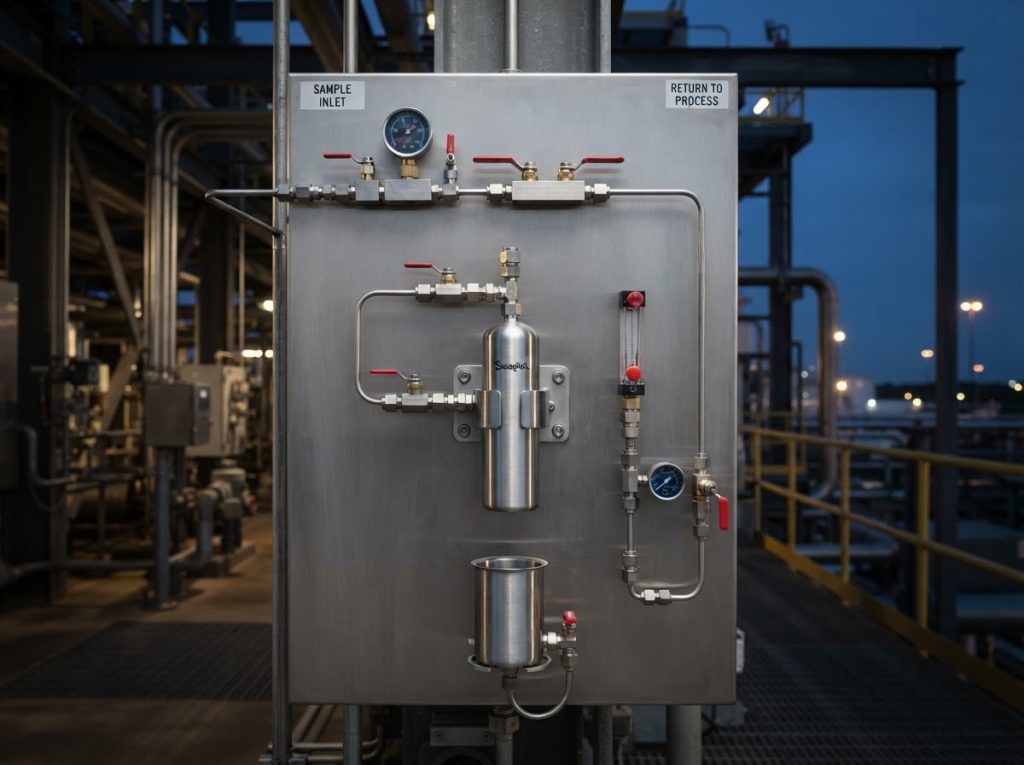
Closed-loop grab sampling uses a controlled flow path to collect a discrete sample while managing the fluid that passes through the station.
Depending on the application, the system may use:
Capabilities
Closed-Loop Sampling Capabilities
From the fluid and the laboratory method to the return point and long-term support.
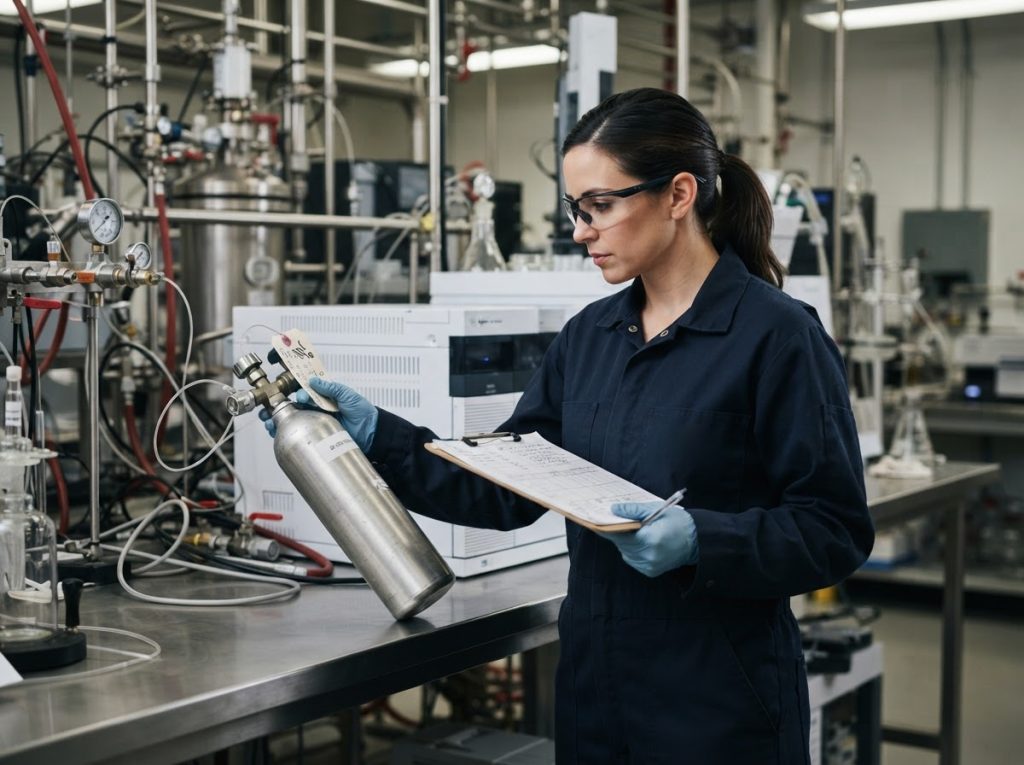
Application and Sampling-Method Review
Start with the fluid composition, pressure, temperature, phase, and laboratory requirements. Sample container selection and handling conditions should preserve the properties relevant to the intended analysis.
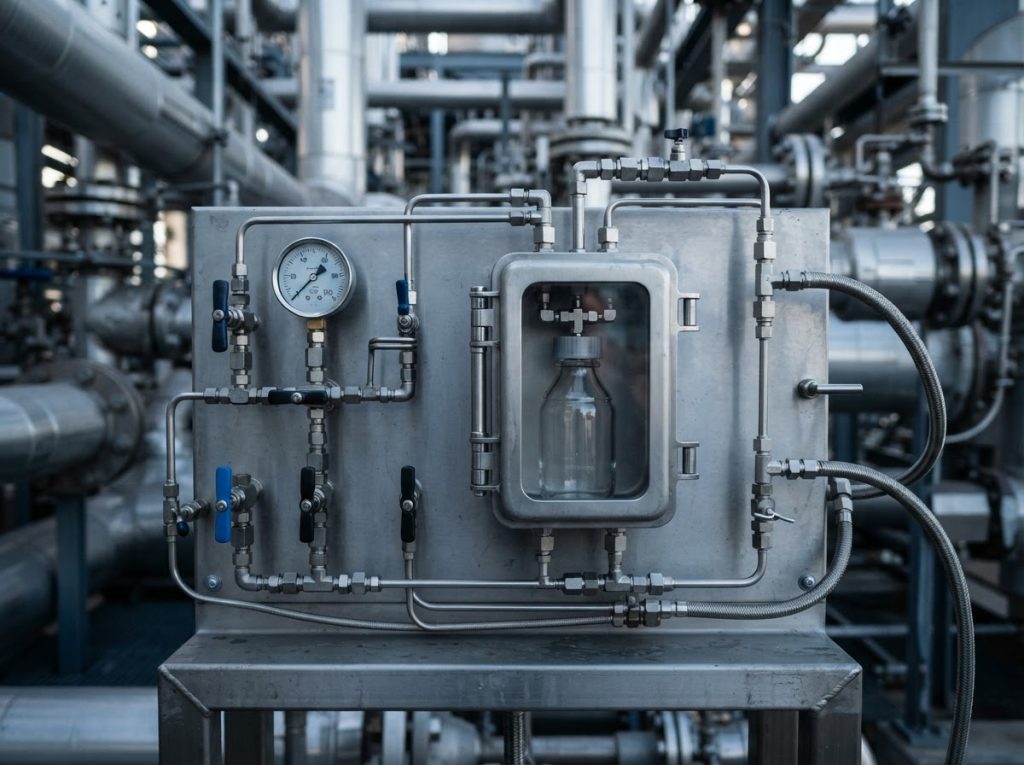
Station and Component Arrangement
Define the specified valves, connections, sample container interfaces, and any required conditioning components. The layout should support the sequence of operation and access needed for inspection and service.
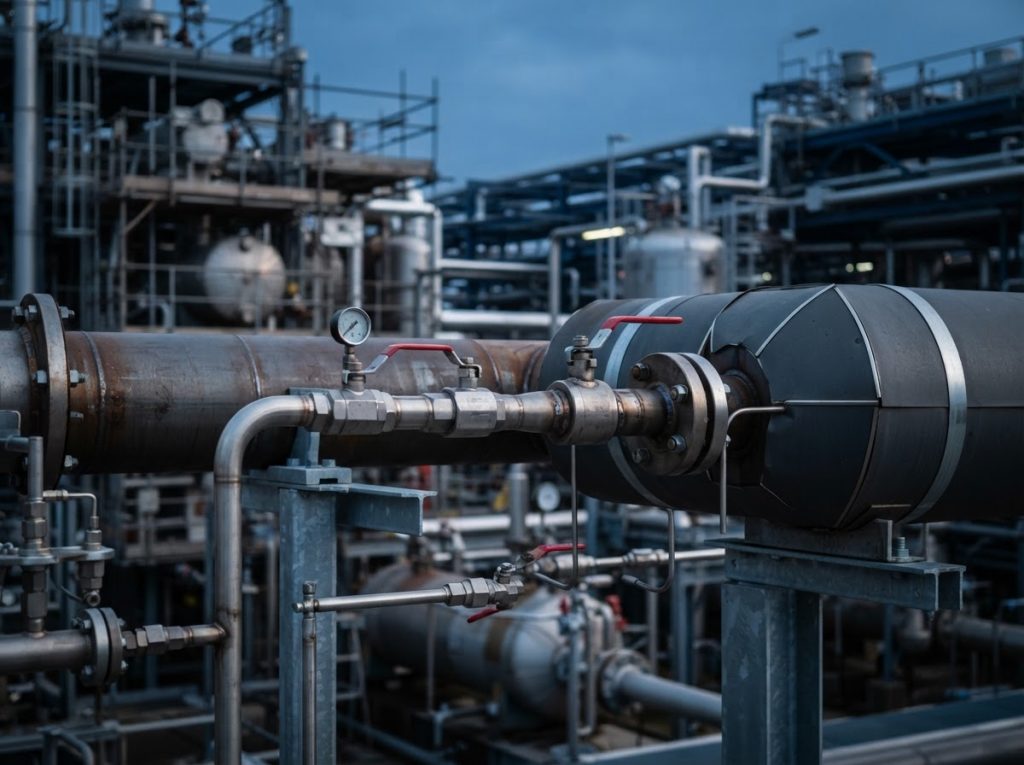
Return and Recovery Interfaces
The design must identify where circulating, displaced, or unused sample fluid goes. Return pressure and the site's approved handling requirements can affect whether a proposed loop is practical.
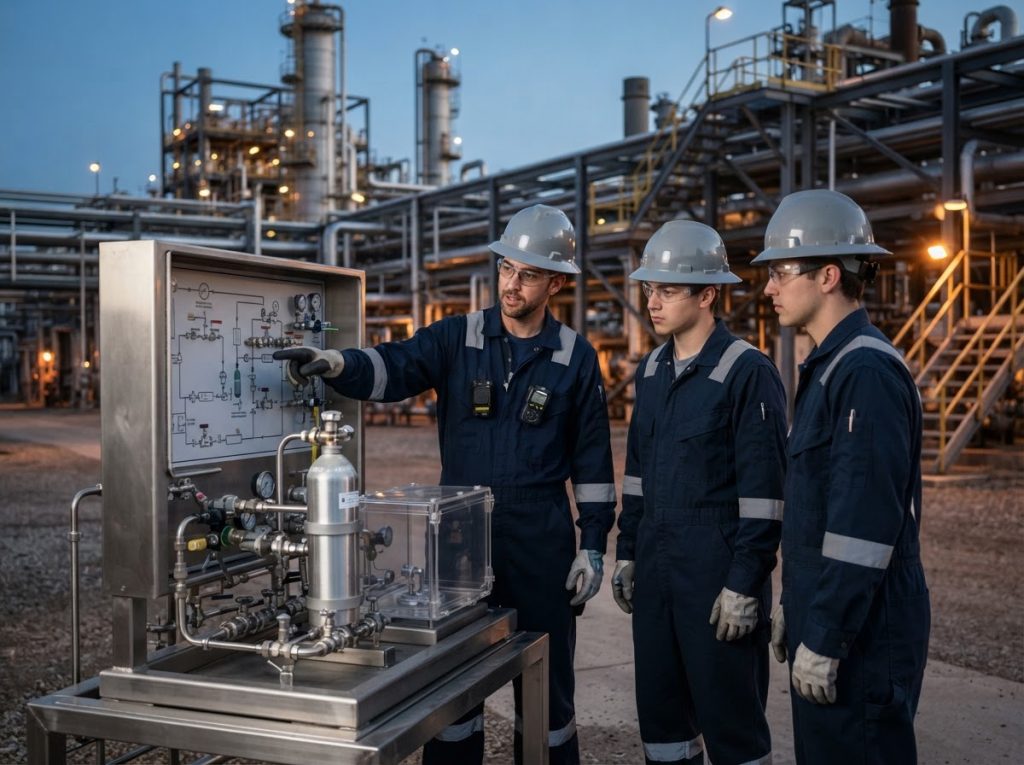
Installation and Ongoing Support
The station can be supported through defined installation, repair, and reliability activities. Operator training and documented procedures help connect the selected hardware with the actual sampling task.
Built Around the Application
Built Around the Sample and the People Collecting It
Provide the process data, required sample volume, container type, sampling frequency, laboratory method, and available connection points. Discuss known concerns such as difficult access, leakage, residual pressure, or inconsistent sample handling during scope development.
Sampling of hazardous fluids must follow the facility's approved controls. This page describes service capabilities, not an operating procedure or authorization to collect a sample.
Discuss Closed-Loop Grab Sampling →Provide:
Why AES
Why Choose AES for Closed-Loop Sampling?
AES combines specialized grab-sampling design and installation support with repair, inspection, reporting, and operator-training capabilities. That lifecycle perspective helps facilities plan for how the station will be used and maintained after installation.
Design
Installation
Repair
Inspection
Reporting
Operator training
Does closed-loop sampling guarantee zero emissions?
No. The result depends on the design, equipment condition, operating method, and process fluid. Claims about emissions or exposure require application-specific evaluation and supporting evidence.
Can the same station sample different fluids?
Only if the arrangement and materials are suitable for each service. Compatibility, contamination, phase behavior, and sample handling requirements must be reviewed before changing the application.
Can an existing open sampling point be upgraded?
A potential upgrade should begin with an application and field-interface review. Available tie-ins, return arrangements, space, and the required sample method determine the feasible options.
Discuss a Closed-Loop Sampling Requirement
Share the fluid, operating conditions, sample method, and available process connections with AES to evaluate the station requirements.
Discuss Closed-Loop Grab Sampling →