
Field Services · Analyzer Installation
Analyzer Installation
Install the Analyzer With the Connections Its Application Requires
AES supports the field installation of process analyzers and associated analytical assemblies. We work from the approved equipment requirements and installation documentation to define how the analyzer will be mounted, connected, accessed, and prepared for startup.
Mounting
Placement and access
Sample
Inlet and return
Power & signals
Electrical interfaces
Handover
Checks before startup
What It Is
What Is Process Analyzer Installation?
Analyzer installation is the physical placement and connection of analytical equipment at its operating location.
Each of these influences the installation:
Capabilities
Analyzer Installation Capabilities
Four parts of an installation scope, from mounting to the handover before startup.
Equipment Placement and Mounting
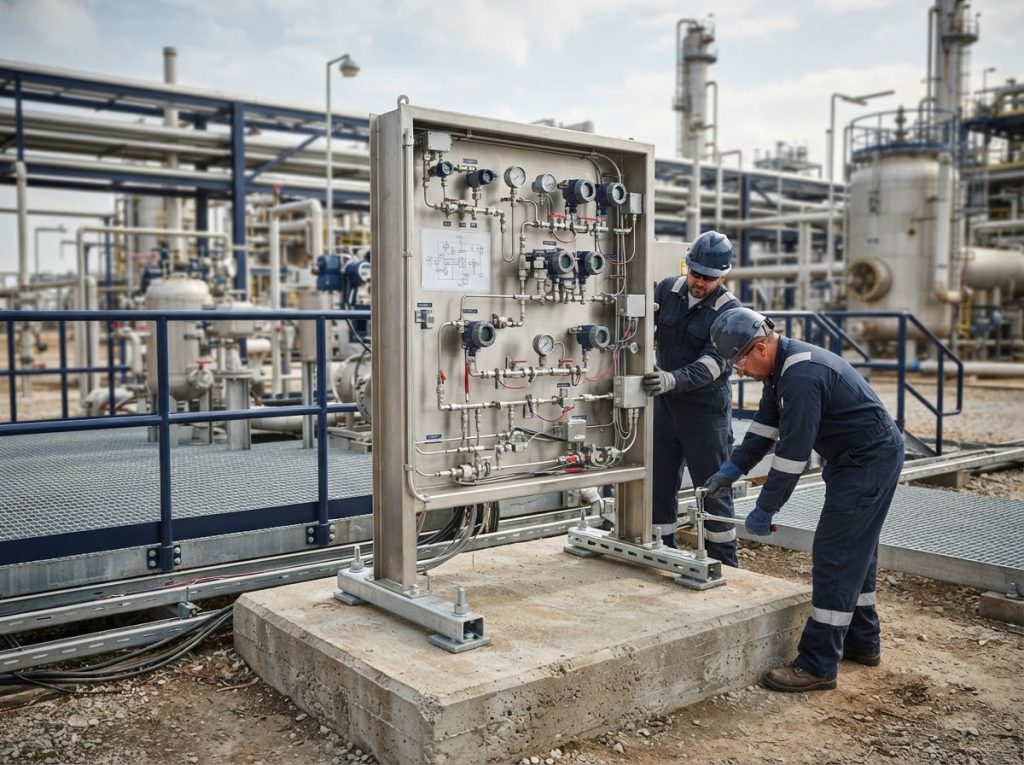
Installation planning considers the supplied mounting arrangement, available space, access for service, and surrounding equipment. Panels, racks, cabinets, and packaged assemblies require different support and connection details.
Sample and Utility Interfaces
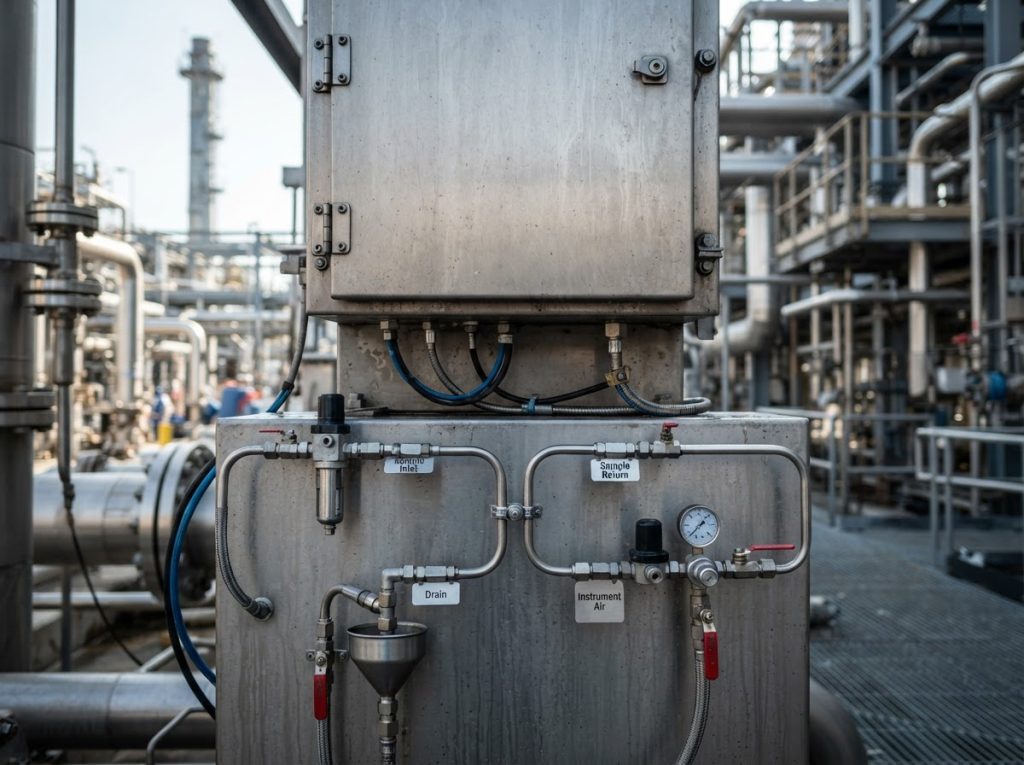
The field scope identifies sample inlet and return connections, applicable drains or vents, and required utilities. Connections are made according to the approved design and the site's permitted work procedures.

Electrical and Signal Connections
Power and signal requirements are coordinated with the project's electrical scope. Termination information, identification, and installation checks help make the transition from construction to commissioning more traceable.

Installation Checks and Handover
Agreed checks can document physical completion and identify open items before startup. Manufacturer-specific setup, calibration, process introduction, and final acceptance remain subject to the assigned commissioning responsibilities.
Before Work Begins
Built Around the Analyzer and the Installation Site
Before work begins, confirm the equipment model, installation drawings, utility conditions, area classification, access restrictions, and owner requirements. Replacing an existing analyzer may also require review of the mounting footprint and whether legacy connections remain suitable.
Where conditions are uncertain, a Site Survey & Walkdown can establish a more reliable field scope.
Plan an Analyzer Installation →Before work begins, confirm:
Why AES
Why Choose AES for Analyzer Installation?
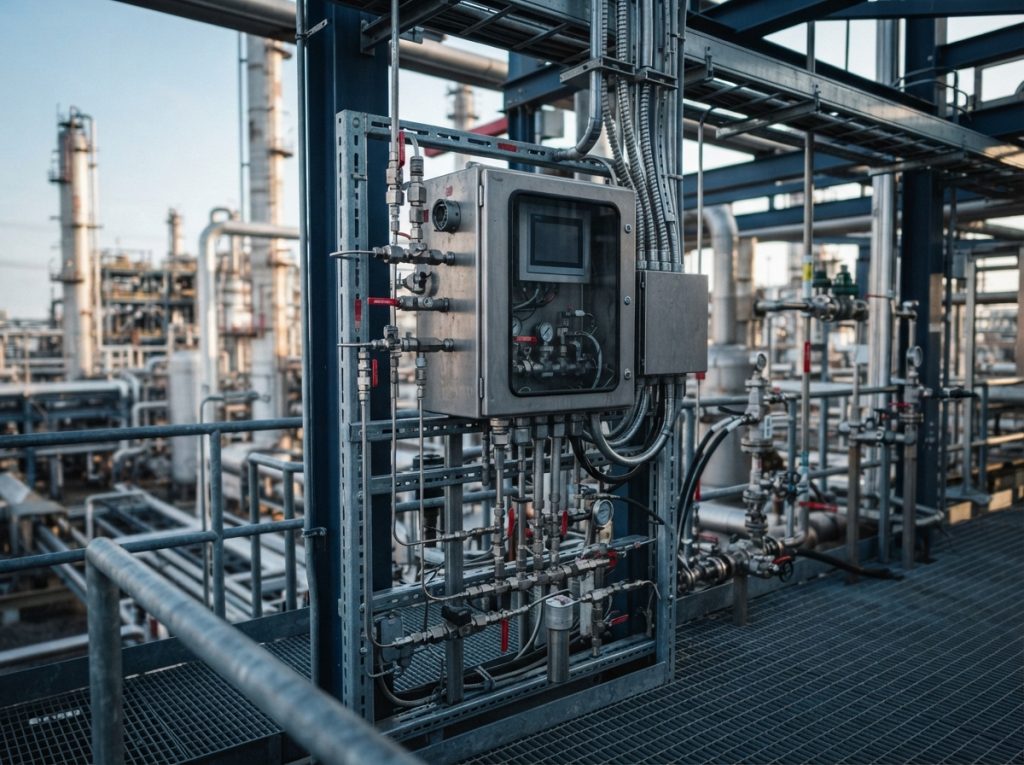
AES approaches installation as part of a connected analytical system. Considering the analyzer alongside its sample delivery and supporting equipment helps avoid a scope that stops at mounting the instrument while leaving important interfaces unresolved.
Analyzer
Sample delivery
Supporting equipment
Can AES install a customer-supplied analyzer?
Customer-supplied equipment can be included in the project scope. Provide manufacturer installation instructions, connection details, and any requirements for authorized startup support before scheduling the work.
Does installation include calibration?
Not automatically. Calibration and measurement verification belong in the agreed startup or commissioning scope, with suitable media, procedures, and manufacturer participation identified where required.
Can an existing analyzer be replaced in the same location?
Possibly. The replacement must be checked against the existing supports, sample conditions, utility connections, electrical requirements, and service clearances. A similar footprint does not establish compatibility by itself.
Discuss Your Analyzer Installation Project
Share your analyzer information, planned location, and installation schedule so AES can help define the field work and handoff requirements.
Plan an Analyzer Installation →